For most business leaders, “Digital Transformation” feels like a massive, looming mountain. We often think of it as a one-time event: “Once we scan these 500 boxes of records, we’ll be a digital company.”
But as we enter 2026, the goalposts have shifted. Simply having a digital version of a paper document isn’t enough. If you’ve simply replaced your rows of archive boxes with a digital “black hole” of unorganized PDFs, you haven’t gained efficiency—you’ve just moved the clutter. The real competitive advantage this year isn’t storage; it’s Ease of Access.
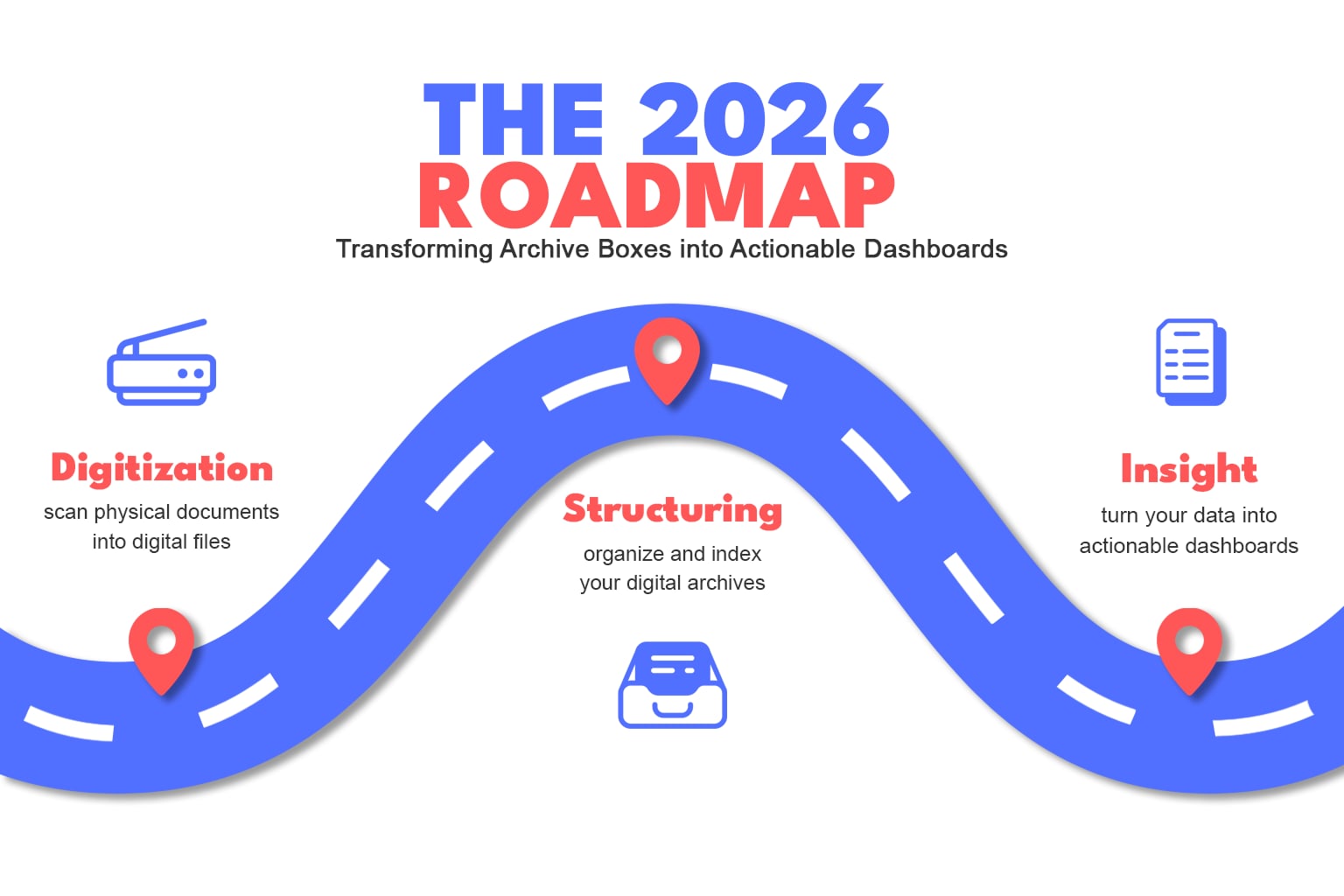
To hit peak efficiency, your business records need to move through three distinct phases:
This is the foundation. We take your physical legacy—invoices, HR files, blueprints, or medical records—and convert them into high-resolution, OCR-searchable (Optical Character Recognition) digital assets. This clears the office floor, but it’s only the beginning.
Once your data is digital, it needs a “Map.” This is where professional business consulting comes in. We help you define:
This is where the magic happens. By connecting your digital archives to a tool like Microsoft Power BI, your “dead” files come to life.
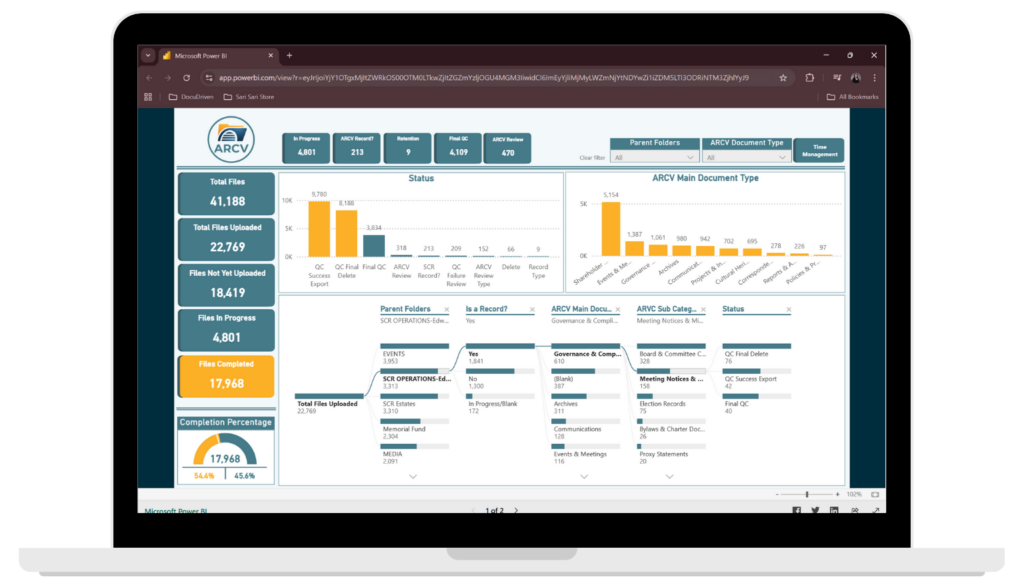
- What is Power BI? It is a powerful business intelligence tool that takes raw data (like the information found in your scanned documents) and turns it into easy-to-read visual charts, maps, and graphs. Essentially, it translates spreadsheets, database and files into a one page dashboard of what you care to know about the data.
Here’s how it looks:
Imagine instead of opening 50 individual PDFs to check quarterly spending, you look at a single Power BI dashboard that pulls that data automatically. You can see regional trends, profit margins, and operational bottlenecks—all visualized in real-time.
Industry research from late 2025 indicates that over 60% of business leaders now prioritize operational efficiency as the primary driver for their digital transformation. In a world where labor costs are rising, spending 15 minutes searching for a single file is no longer just a nuisance—it’s a direct drain on your bottom line. Transitioning to a “Digital Insights” model doesn’t just save physical space; it saves hundreds of man-hours per year by putting the right data in front of the right people instantly.
If your scanning is done (or underway) and you’re wondering how to actually use that data to drive your business forward, we’re here to help.
We are currently offering a “Data Readiness Audit” for Q1. By completing our brief assessment form, you’ll provide us with the key details about your current digitization stage and your primary goals for 2026. Once submitted, one of our specialists will reach out to schedule a personalized deep-dive call.
We’ll review your current system and show you exactly how Power BI could turn your specific records—whether they are in HR, Logistics, or Finance—into a live, actionable dashboard.