







Quick Answer
Records management consulting is a professional review of how an organization creates, stores, finds, keeps, and disposes of its physical and digital records, followed by a practical plan to improve it.
A good engagement fits your goals and budget and can include help carrying the plan out. DocuDriven has provided these services for more than 40 years.
Key takeaways
- It covers physical records and digital records.
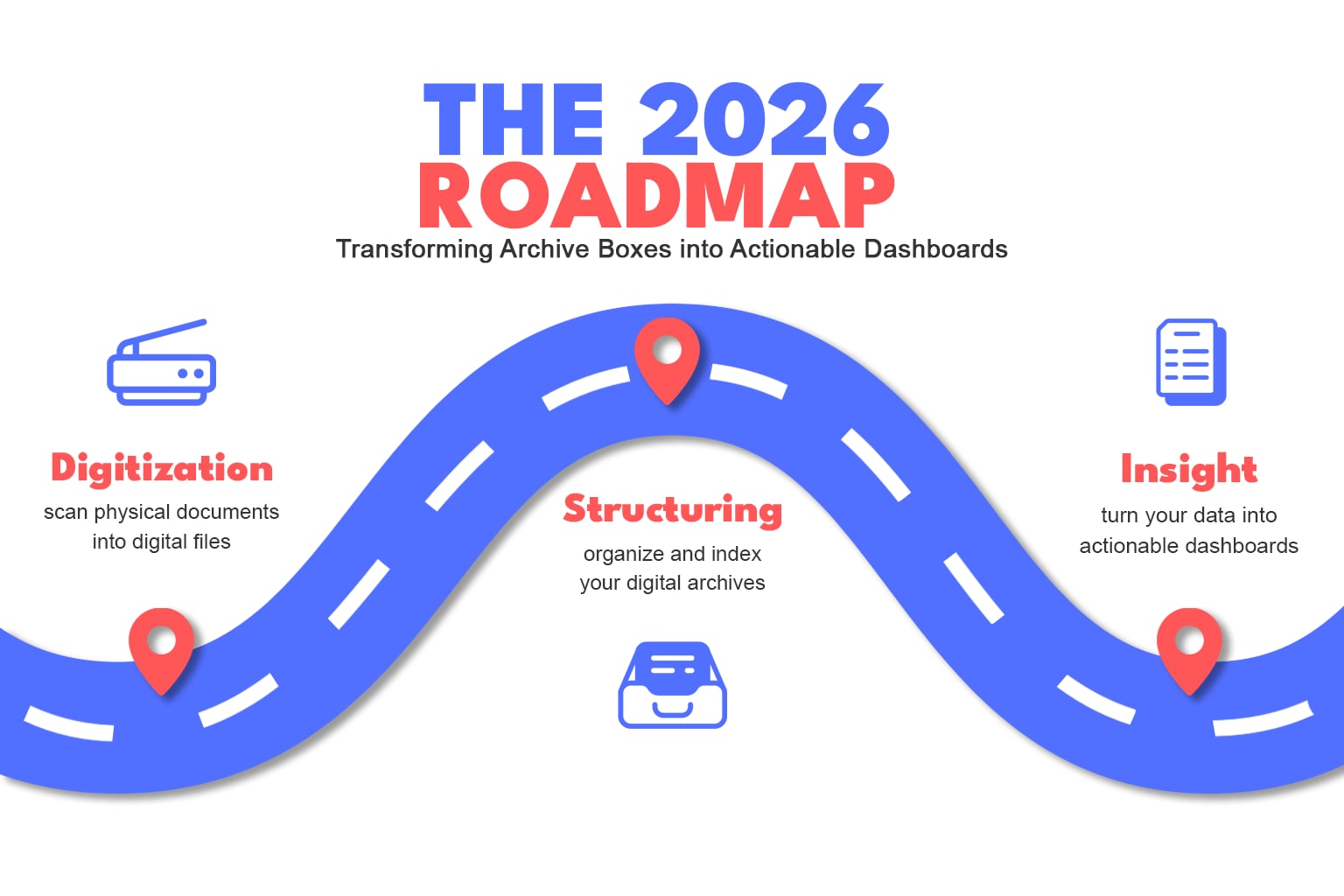
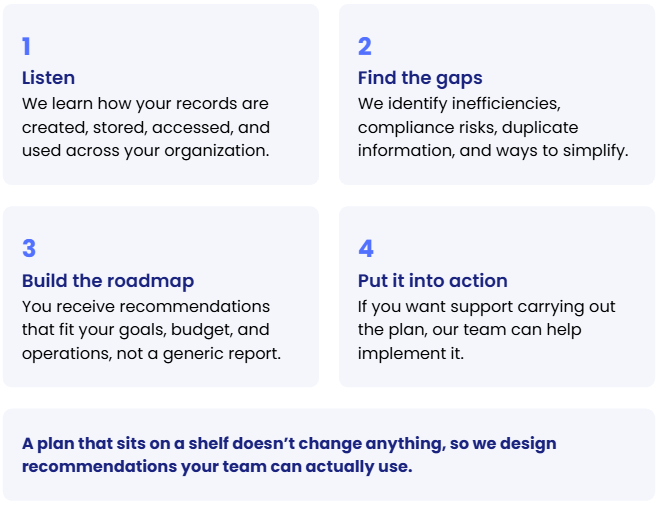
- The usual process is four steps: listen, find the gaps, build a roadmap, put it into action.
- The right answer isn’t always scanning.
- Cost and timeline depend on volume, locations, and how much help you want.
WHAT DOES RECORDS MANAGEMENT CONSULTING COVER?
It covers the full life of your information: how records are created, where they are stored, how they’re found, how long they’re kept, and how they’re securely destroyed or archived. That includes boxes, files, and drawings, as well as shared drives, cloud repositories, email, and business systems.
The goal isn’t organizing files for the sake of organizing. It’s helping your organization work more efficiently and giving management accurate, current information to make decisions with.
WHAT DOES RECORDS MANAGEMENT ENGAGEMENT LOOK LIKE?
WHAT DOES IT LOOK LIKE IN PRACTICE?
Three recent projects show how this works in practice.
PetroCard · Physical Records Inventory
Hundreds of boxes turned into a searchable inventory
Challenge: A storage room full of boxes, filing cabinets, binders, and large-format plans, and no one with the time to inventory it or decide what to scan, shred, or keep.
What we did: Reviewed every container on site, categorized it using PetroCard’s approved record types, labeled it with a unique Container ID, and built an inventory showing type, year, category, and retention period. On-site work took two days, and reporting was finished within a week.
Result: Full visibility into the records, a defensible inventory baseline for compliance, and reclaimed office space. PetroCard has since brought DocuDriven back for scanning and shredding.
“I was impressed with the thoroughness of the inventory and the professional manner in which you conducted the inventory analysis.”
Cliff Black, Project Sponsor, PetroCard
Bristol Bay Native Corporation · Records Culling and Migration
A time-sensitive Teams and SharePoint migration, finished on the original date
Challenge: The Shareholder Customer Relations department was the last to move its electronic records from a Windows drive to Microsoft Teams and SharePoint, and some files were over SharePoint’s storage limit.
What we did: Assessed every file, culled outdated records, re-categorized what remained, and built a Power BI report with daily progress updates and an estimated completion date.
Result: The volume of files needing review nearly doubled from the original proposal, and DocuDriven still met the original delivery date.
Bristol Bay Native Corporation · Process Optimization
Scattered repositories brought into one trusted system
Challenge: BBNC needed to reduce its electronic and physical document repositories, confirm the remaining documents were complete and compliant, and update categories and file names under a new methodology.
What we did: Set up a test environment on site, delivered a report with recommendations, then expanded the team on site and remotely to carry them out and install document capture software.
Result: Fewer repositories and documents that met compliance standards. The findings, backed by statistics and examples, gave BBNC material it could present to executive management and the Board.
“I have 100% trust in DocuDriven’s ability to help optimize our processes and procedures.”
Lisa Andrus, Records Manager, BBNC
HOW IS RECORDS MANAGEMENT DIFFERENT FROM DOCUMENT MANAGEMENT?
| Aspect | Records management | Document management |
|---|---|---|
| Focus | Full lifecycle of all records | Creating, storing, and finding working documents |
| Formats | Physical and digital | Usually digital systems |
| Retention and disposal | Core part of the work | Often outside its scope |
Many organizations need both, and a consultant can help you decide where each fits.
HOW MUCH DOES RECORDS MANAGEMENT CONSULTING COST?
Cost depends on how many records you have, how many locations and formats they’re in, how complex your compliance needs are, and whether you want a strategy only or help with implementation. Pricing is set after a discovery conversation.
Frequently asked questions
What does a records management consultant do?
They review how your organization handles its physical and digital records, identify gaps and risks, and build a practical plan to fix them. Some, including DocuDriven, can also help carry the plan out.
How long does a project take?
It depends on the size and spread of your records and whether you want strategy only or implementation support.
Do we need to digitize everything?
No. Many organizations keep some records in physical storage, digitize others, and securely destroy what’s no longer needed.
When should a company hire a consultant?
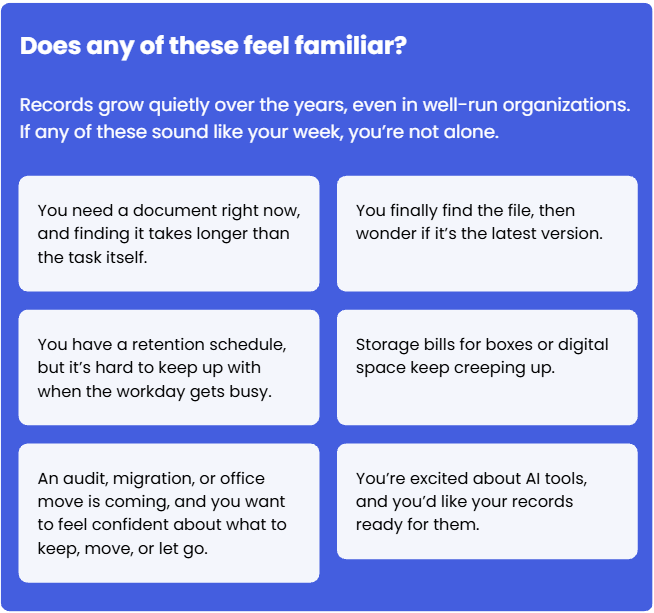
Common triggers are rising storage costs, trouble finding documents, an upcoming audit or migration, and plans to use AI tools.
Who benefits most?
Organizations with large volumes of records or compliance obligations, including government, healthcare, education, legal, and non-profit teams.